
Classic artwork
Most people can appreciate the experience of going to the movies and being impacted by a work of creativity. Movies give us the opportunity to be captivated by a director’s imagination to tell an engrossing story https://voltage-bet.co/tennis/. From comedy to drama to action to horror and more, movies have shaped the world. Art is a way to display the importance of your favorite movies to your world.
Transform your home theater, family room, or any living space into a cinematic haven with eye-catching wall art inspired by the movies you love. Whether you’re a fan of classic westerns, thrilling sci-fi, or spine-chilling horror, movie wall art adds personality and flair to your space, making it a reflection of your unique tastes. Choose from a wide selection of high-quality poster prints, featuring iconic movie scenes, memorable moments, or beloved characters. Looking for something extra? Explore photographic prints that capture legendary movie stars, iconic vehicles, or unforgettable props from your favorite films. These pieces go beyond décor; they let you relive the magic of the big screen every time you walk into the room. From timeless classics to modern blockbusters, there’s wall art to match every fan’s passion. Let your walls tell a story—your story—through the movies that have left a lasting impression on your heart. Elevate your space today with movie-themed wall art that brings your fandom to life!
Use of this site constitutes acceptance of our Terms of Service and Privacy Policy.This site is designed to be compliant with current web accessibility standards, however if you’re having trouble accessing any area of the site please call (212) 226-2207 or email gallery@posteritati.com.
Film graphic
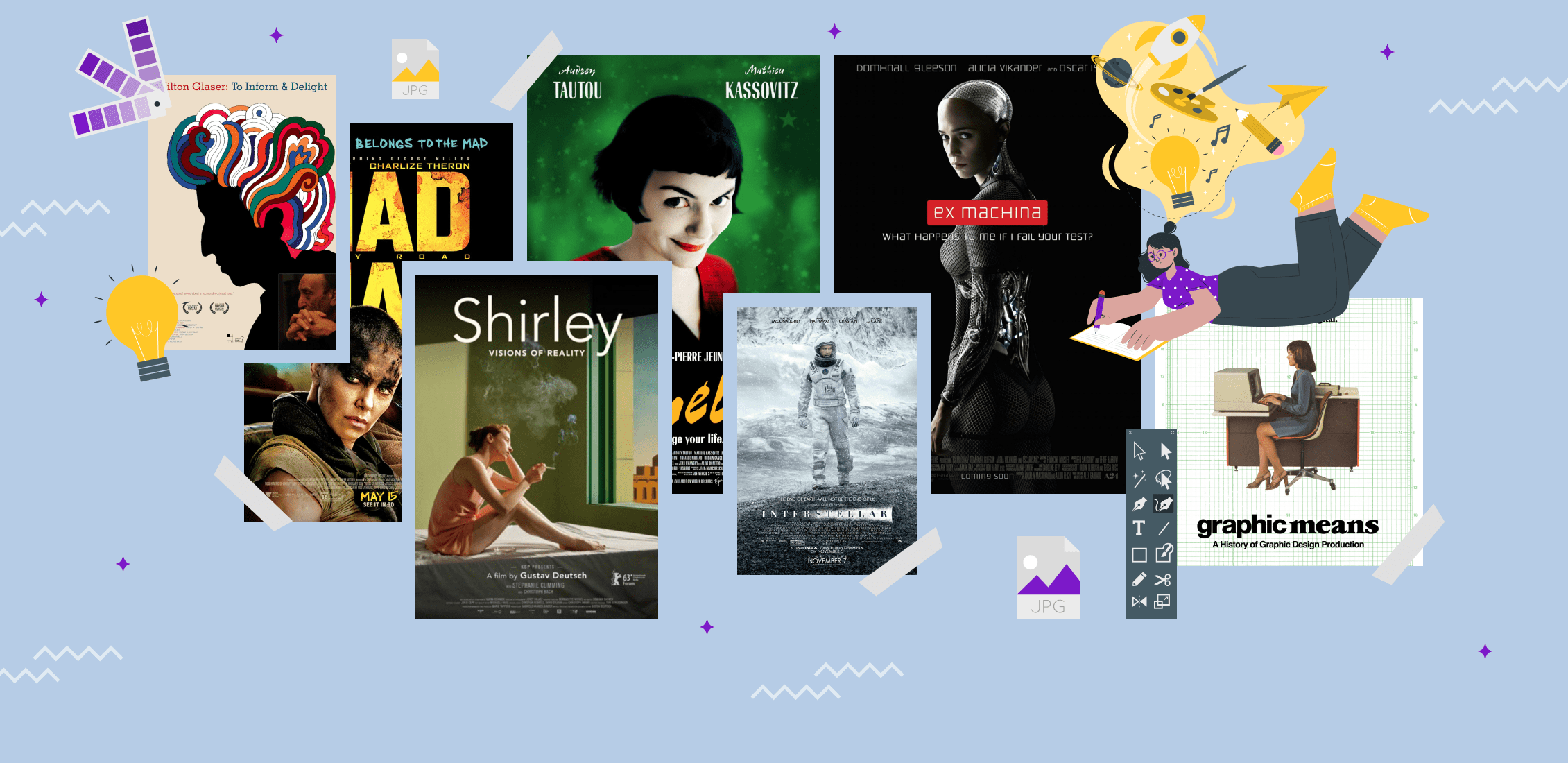
When people think of graphic designers, they think of them working in content marketing, advertising, creating logos, websites, and promotional designs for print and the digital world. However, they are just as important in the world of television and film.
And the most prominent and emerging aspect in this direction is the importance of graphic design in film and television. This skill goes beyond its use in social media. Using graphic design can help elevate the visual storytelling involved in making a movie stand out.
In an interview, Annie Atkins mentioned how graphic designers have to be in charge of the most minute details like the newspaper a character is holding and the packaging of the products in a store display in a scene. All of these props and the set designers have to match the period the movie is set in and the genre.
The wonders of tv series and movies never stop moving older and younger audiences.Although the applauses often go to the rest of the team, from now on, let’s keep an eye out for every prop and praise the graphic designers’ team for their larger-than-life contribution.
Andrew LaSane is a freelance writer from South Carolina currently based in Brooklyn. He has written for Mental Floss, Complex Magazine, and Thrillist. He has a Bachelor’s in American Studies from Skidmore College, and a Masters in Media, Culture, and Communications from NYU. Andrew is a member of a weekly movie trivia team and spends his free time customizing sneakers with pop culture themes. Follow him on Twitter at @laptop_lasane.
Empire of the Sun artwork
“The original idea for the Tate Modern exhibition Conflict, Time, Photography came from a coincidence between two books that have captivated and inspired me for many years: Kurt Vonnegut‘s classic 1969 novel Slaughterhouse-Five and the Japanese photographer Kikuji Kawada’s 1965 photobook The Map. Both look back to hugely significant and controversial incidents from the Second World War from similar distances.
“The idea of photographing absence became really important,” says Baker. “War is about destruction, removing things, disappearance. A really interesting photographic language about disappearance in conflict emerged and it is extremely powerful. How does one record something that is gone?””
In an innovative move, the works are ordered according to how long after the event they were created from moments, days and weeks to decades later. Photographs taken seven months after the fire bombing of Dresden are shown alongside those taken seven months after the end of the First Gulf War. Images made in Vietnam 25 years after the fall of Saigon are shown alongside those made in Nakasaki 25 years after the atomic bomb. The result is the chance to make never-before-made connections while viewing the legacy of war as artists and photographers have captured it in retrospect…
Toshio Fukada (Japanese, 1928-2009) The Mushroom Cloud – Less than twenty minutes after the explosion (4) 1945 Tokyo Metropolitan Museum of Photography © The estate of Toshio Fukada, courtesy Hiroshima Peace Memorial Museum










Compartir