
Retro graphic
The sense of movement in art forms was embraced by twisting a mirrored tube and bringing out a new perspective for the viewer’s focus on the art. Optical art played a great role in creating illusions https://thesupperstar.com/. The artwork is popular today in motion and video design.
If you’re also interested in this genre of throwback designs then you’re in good company. With so much passion retro design around, but a distinct lack of helpful guides or entry points to draw inspiration from, we’ve decided to step in and make one.
Steampunk is the perfect marriage of the past and the future in full retrofied glory. Heavily influenced by Victorian-era aesthetics, an alternate history where a world that’s still powered by steam is able to create technologies that rival our futuristic imaginations.
“Vintage” designs typically have a “lived-in” or “grunge” texture, giving the design the appearance of having been around for a while. This is an easy shorthand for making your retro design look older than it is, but it doesn’t usually pair very well with the aforementioned Art Deco style.

Cinematic artwork
The first scenes of Pierrot le fou begin with Jean-Paul Belmondo in the bath, reading from his copy of Elie Faure’s Histoire de l’Art. An essential reference within art criticism, this book reappears across the film in the form of different passages. A few moments later, in Marianne’s apartment, art meets film once more. With posters and postcards, we recognize the works of Henri Matisse and Pablo Picasso spread across her bare walls. Although it may not be glamorous, Godard’s choice of decor for Marianne’s apartment more closely resembles how many of us appreciate masterpieces: from a distance. Who hasn’t displayed their adoration for an artist in a gift shop?
Fritz Lang’s ‘Metropolis’ finds its architectural muse in Pieter Bruegel the Elder’s ‘The Tower of Babel’. The movie’s towering cityscapes reflect Bruegel’s depiction of ambition and chaos, offering a futuristic take on this classical theme.
Edward Hopper is a prime example of an artist who uses cinematic framing in his work. His painting Nighthawks (1942) resembles a movie still, with its carefully composed setting and dramatic lighting creating a sense of isolation and tension. Another example is David Hockney, who often employs cinematic perspectives in his large-scale works, such as A Bigger Splash (1967), which captures a single moment with a sense of anticipation and movement.
This blog will focus on several key areas where cinematic influences are most evident in painting. We will begin by providing a historical context, highlighting the early intersections of film and painting and the evolution of cinematic techniques. Next, we will delve into specific techniques borrowed from film, such as composition and framing, lighting and color, and narrative storytelling. Through these sections, we will explore how painters use these techniques to create depth, mood, and symbolic meaning in their works.
has played a significant role in his craft. These are the imagery he grew up with, watching Hollywood movies from the 40’s, 50’s, and 60’s, featuring Marilyn Monroe, Humphrey Bogart, and a host of other stars. Form is an immutable concept, but it is a lesson that applies in both the moving image and the still image. The romantic imagery of a film noir sequence can last a lifetime, but so can a still painting, where what is left unsaid in a single moment can often create as much drama as an action movie with a host of explosions, gunfire and chases.
Theatrical artwork
Live theater offers a real-time, shared experience between performers and the audience. The immediacy of the performance, the energy in the room, and the unpredictability of live action contribute to its uniqueness.
In a theatre production, the hierarchy of roles from the director to the stage manager orchestrates the ensemble of actors and actresses to breathe life into the performance. The theatre company encompasses a collection of individuals, each with specialized tasks, managed and unified by the director to achieve a coherent vision.
This was a golden age for theatre in Britain, one in which it became a truly popular form of entertainment. Although they sat in different parts of the auditorium, people of all classes attended, from workmen to monarchs. (The British royal family, unlike many of their European counterparts, had no private theatre, meaning King George III and Queen Charlotte had to attend public performances to indulge their love of drama.)
Johann Zoffany, R.A. (Frankfurt 1733-1810 London), Garrick with Burton and Palmer in ‘The Alchymist’. Oil on canvas. 41⅞ x 40⅛ in (106.5 x 101.9 cm). Sold for £1,042,500 on 8 July 2021 at Christie’s in London
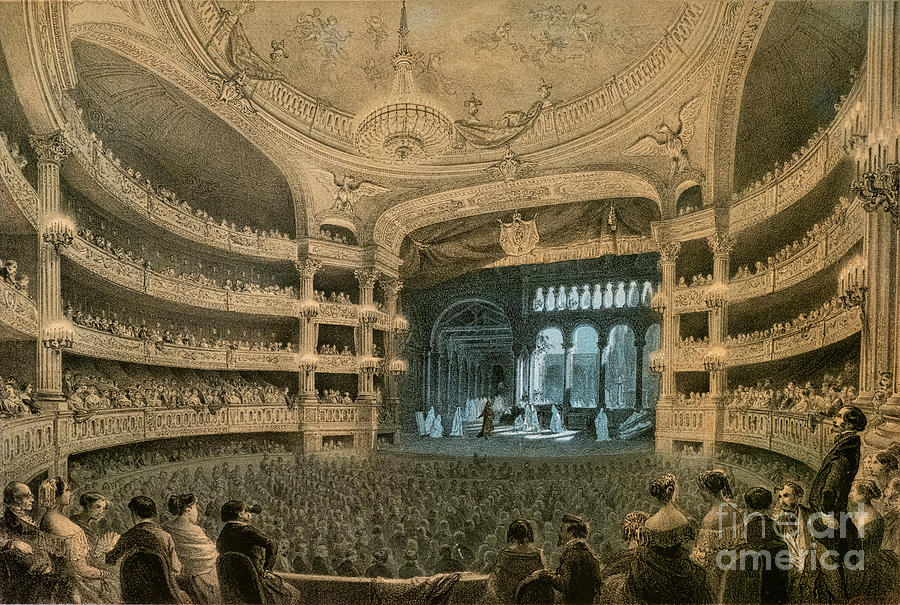
Live theater offers a real-time, shared experience between performers and the audience. The immediacy of the performance, the energy in the room, and the unpredictability of live action contribute to its uniqueness.
In a theatre production, the hierarchy of roles from the director to the stage manager orchestrates the ensemble of actors and actresses to breathe life into the performance. The theatre company encompasses a collection of individuals, each with specialized tasks, managed and unified by the director to achieve a coherent vision.
Film graphic
The collaboration between graphic designers and film professionals blurs the line between disciplines, with designers contributing their expertise in visual communication to create immersive on-screen worlds. Graphic design in film and television is a dynamic art form that continually pushes creative boundaries and engages audiences on a visual level.
Covers: The location survey often reveals the need for graphic covers and Greeking. These signs, graphics, or logos can’t be removed from a location but must be concealed during filming. In such cases, new graphics are sometimes made to hide these elements from view.
Graphic design in cinema is a hidden but powerful force shaping how we perceive, feel, and remember films. It blends artistry with strategy, emotion with communication. Whether in a gritty poster or a blink-and-you-miss-it prop, design plays a crucial role in turning a film into a fully realized world.
A scripted graphic refers to any graphic element written in the script. The script is the primary guide for all props and scenery intended for character action, film design, tone, and era. Read the dialogue and scene descriptions for details about a graphic, including exact wording for any text, specific names, photos, illustrations, and screen graphics. This might include folding up a note, scrolling through a webpage, or spray painting graffiti on a wall. Also, a graphic might have exact wording in an actor’s dialogue, like a letter; in that case, the graphic needs to say exactly what the actor is speaking.
While visual storytelling has existed since the silent film era, the role of graphic design in cinema gained prominence in the 1950s–1970s—especially with the rise of modernist poster design and typographic title sequences by legends like Saul Bass.





Compartir